Secure Your Agentic Development. With Apiiro Guardian Agent.
It protects coding agents and secures intent and code.
Trusted by Fortune 500 AI pioneers








SETTING THE STANDARD IN AGENTIC APPSEC
Recognized as a leader in SSCS and ASPM by Gartner, IDC, and Frost & Sullivan.
Gartner Ranks **Apiiro a Leader** in 2026 Magic Quadrant for Software Supply Chain Security (SSCS)
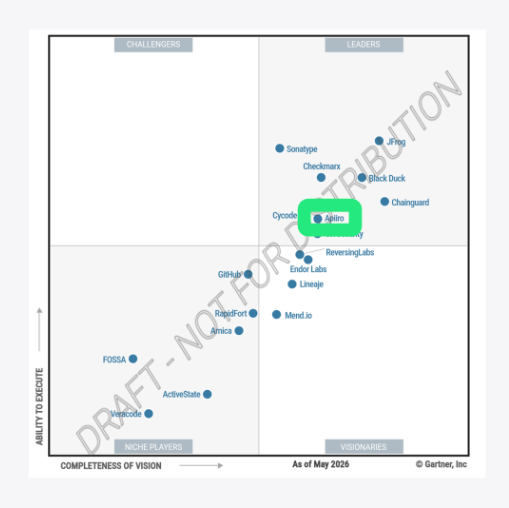
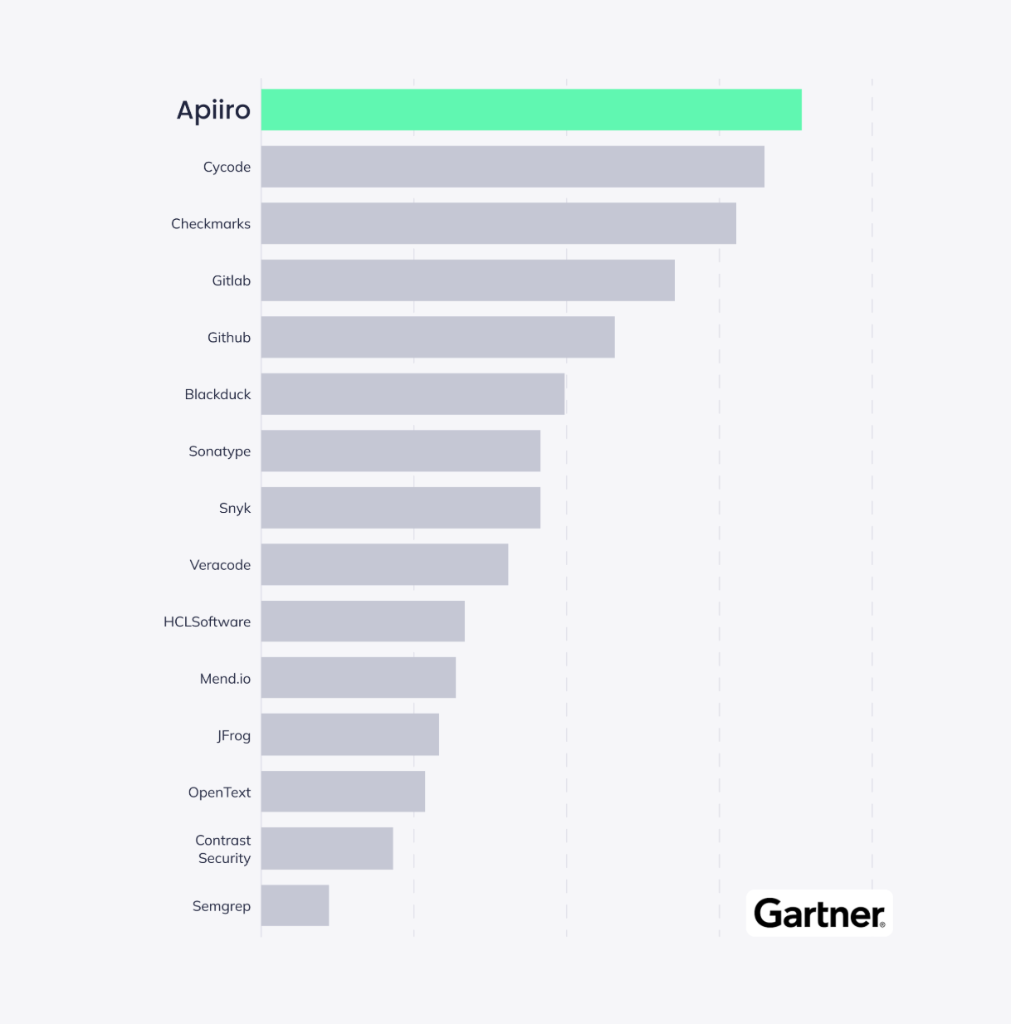
Gartner Ranks **Apiiro #1 in ASPM** in 2025 Magic Quadrant for Application Security Testing (AST)
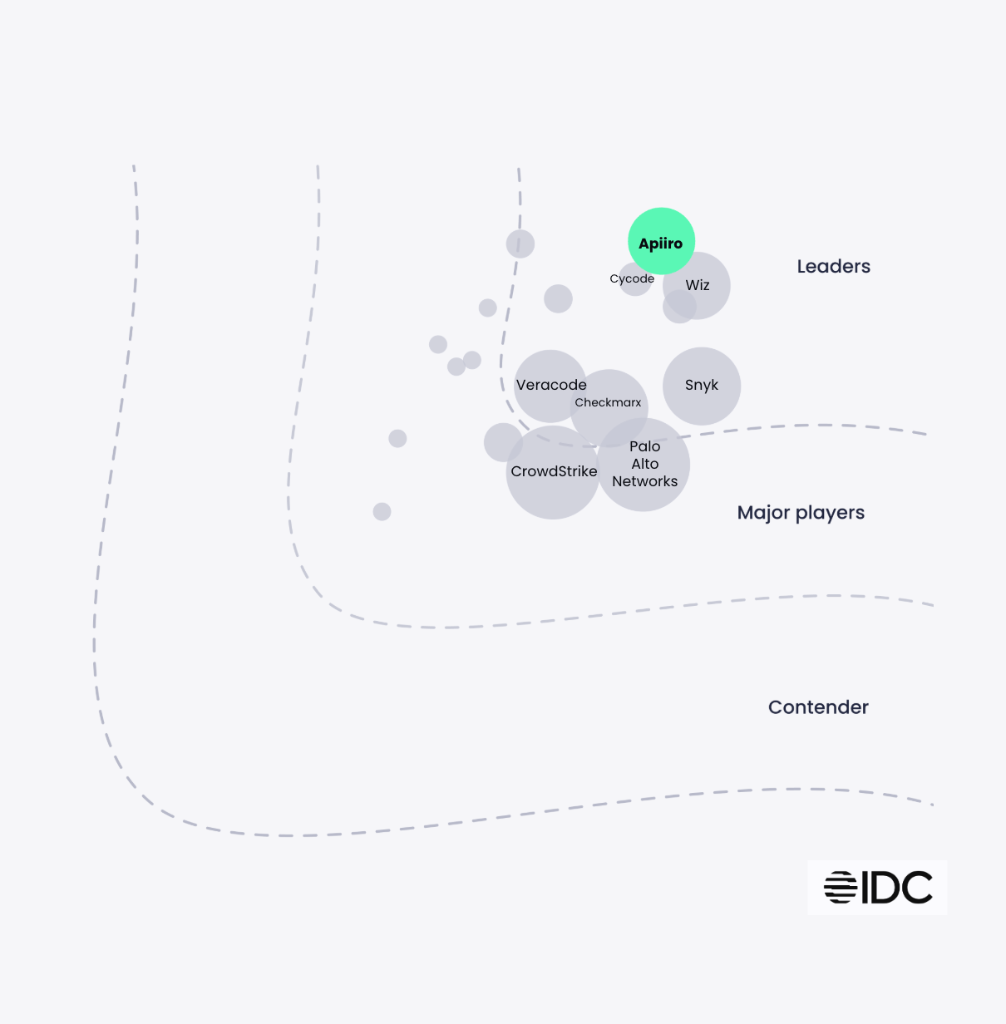
IDC Ranked **Apiiro #1 Leader** in ASPM in the 2025 IDC MarketSpace
Guardian Agent turns posture into action
Discover
Discover AI usage in code (AI BOM)
Discover, inventory and catalog AI models, agents, MCP servers, AI datasets, 3rd-party services, and everything inside your codebases
Discover AI supply chain (AI BOM)
Discover and inventory the AI tools your developers and coding agents use, including IDEs, extensions, skills, plugins, and MCP servers.
Discover API in code (API BOM)
Discover, inventory, and classify APIs directly from code, including endpoints, methods, sensitive data exposure, authentication, and ownership.
Discover Open Source dependencies and licenses
Discover, inventory, and track open-source dependencies, licenses, end-of-life (EoL), versions, vulnerabilities, and where they are used across your software architecture graph.
Discover internally developed packages
Discover and inventory internally developed packages, shared libraries, ownership, versions, and downstream impact across the software graph - powered by patented Deep Code Analysis (DCA).
Discover Cryptography BOM (CBOM)
Discover, inventory, and assess cryptographic usage in code, including encryption, hashing, keys, secrets, certificates, algorithms, and KMS implementation.
Discover Pipeline BOM (PBOM)
Discover, inventory, and map CI/CD pipelines, build systems, artifacts, registries, deployment flows, and the software delivery paths from code to runtime.
Discover technologies in code
Discover, inventory, and catalog frameworks, languages, databases, SDKs, libraries, infrastructure-as-code, exit points, and technologies used across your codebases.
Discover and visualize your Software Architecture Graph
Visualize your evolving software architecture from code to runtime, including micro-services (modules), APIs, OSS dependencies, data flows, technologies, AI, code ownership, and more.
Assess
Assess risk with a unified policy and risk engine
An open, graph-based risk engine that correlates findings from 1st/3rd-party tools, maps them to your software graph, detects toxic combinations/blast radius, and prioritizes business-specific risk.
Assess AI risk across code and supply chain
Assess AI usage risks across code and the software supply chain - including dependencies, models, coding agents, MCP servers, skills, extensions, and more.
Assess risk across code modules (micro-services)
Continuously assess the risk of every code module (service) using software architecture context - from code to runtime - including code ownership, exposure, threat intel, and business impact.
Assess risk across every code repository
Continuously assess the risk of every code repository using software architecture context - from code to runtime - including code ownership, exposure, threat intelligence, and business impact.
Assess risk across every business application
Continuously assess the risk of every application using software architecture context - from code to runtime - including code ownership, exposure, threat intelligence, and business impact.
Assess risk across every artifact
Continuously assess the risk of artifacts (containers) using software architecture context - from code to runtime - including code ownership, exposure, threat intelligence, and business impact.
Assess risk across every software build and release
Continuously assess the risk of every build and deployment pipeline using software architecture context - from code to runtime - including code ownership, exposure, threat intelligence, and business impact.
Assess risk across every SBOM for 3rd-party applications
Continuously ingest, assess, manage, and track Software Bill of Materials (SBOMs) across your your codebases, software supply chain (OSS), and 3rd-party applications.
Prevent
Prevent risk before code exist with secure prompt
Prevent coding agents from generating vulnerable and non-compliant code by seamlessly enriching prompts with context from your software graph and organizational policies
Prevent risk before it reaches your source code manager
Prevent coding agents and developers from committing vulnerable and non-compliant code to SCM - stopping the bleeding before risk enters the codebase.
Prevent risk at the design phase
Detect threats across feature requests, diagrams, and design specs - then generate contextual countermeasures using the associated repository’s software architecture graph.
Detect
Detect application vulnerabilities with AI-powered SAST
AI-powered SAST that uses context from the customer’s software graph - from code to runtime - and business risk to detect vulnerabilities, validate true positives, identify false positives.
Detect open source vulnerabilities a licenses with AI SCA
Continuously detect vulnerable and malicious OSS components and risky licenses using AI-powered context from the customer’s software graph - from code to runtime - and business risk.
Detect software supply chain security vulnerabilities and misconfigurations
Continuously detect CI/CD pipeline and source code management (SCM) misconfigurations, vulnerabilities, exposures, and supply chain risks.
Detect vulnerable AI frameworks, skills, extensions, plugins, and MCP servers
Continuously detect and manage risks across AI coding agents, IDE extensions, MCP servers, skills, plugins, and other AI development tools.
Detect and validate secrets, including leaked secrets
Continuously detect and validate exposed, hardcoded, and leaked secrets across code history, pipelines, AI tools, and documentation.
Detect Infra-as-Code (IaC) misconfigurations
Continuously detect misconfigurations and policy violations risks across IaC, Docker, and Kubernetes configurations - correlated with the customer’s software graph from code to runtime.
Detect API security risks in code with runtime content
Continuously detect unauthenticated, shadow, and risky APIs exposing sensitive data (PII, PCI, PHI) directly in code, with automatic correlation to runtime deployment and compensating controls.
Detect sensitive data in code and exposure through APIs
Continuously detect and classify sensitive data (PII, PCI, PHI) across code repositories, APIs, and software assets using context from the software graph.
Detect material code and design changes and drifts
Continuously detect material code, design, and architecture drift across code modules, repositories, APIs, AI and other software assets before they become risk.
Manage
Manage risk by orchestrating all 1st and 3rd-party tools
Open data fabric with 100+ integrations of 3rd-party tools including: SAST, SCA, Secrets, API Security, WAF, Cloud Security, Container Security, MAST, Bug Bounty, and more.
Manage risk with unified visibility and risk-based prioritization
Unify, correlate, de-duplicate, prioritize, and manage AppSec risks across 1st and 3rd-party tools using context from the customer’s software graph and business risk.
Manage risk with built-in and customizable dashboards
Practitioner, developer, and executive dashboards to measure, prioritize, and track application risk, fix progress, compliance, and KPI performance.
Manage risk with automated, risk-based workflows
Automate risk-based approvals, acceptance, SLAs, and fix workflows across AppSec, development and GRC teams.
Manage compliance with built-in and customizable reports
View built-in and generate customizable risk and compliance reports to measure AppSec posture, track fixes, and support audit readiness.
Manage risk with automated pen-test scoping and lifecycle management
Automatically scope, prioritize, and manage penetration testing based on material changes, software architecture, and business risk.
Manage risk with agentic threat hunting
Continuously investigate, correlate, and hunt threats across codebases and the software supply chain using code-to-runtime software graph context, threat intelligence, and business impact.
Manage compliance with agentic evidence collection
Continuously collect, validate, and organize compliance evidence across your agentic development lifecycle, so every audit is always ready.
Fix
Fix code risks at scale with bulk actions
Automatically fix SAST, SCA, Secrets, container, and IaC risks with AI-generated, context-aware fixes tailored to the customer’s software architecture, policies, and compensating controls.
Fix code risks directly from the IDE or coding agent
Guide coding agents to AutoFix SAST, SCA, API, Secrets, container, and IaC risks with context-aware fixes tailored to your software architecture, policies, and compensating controls.
Fix code risks faster by automatically assigning them to the right code owner
Automatically map software components and risks to the right code owners using material change detection, enriched with organizational context from 3rd-party tools to accelerate remediation.
CISO
Generate a report on AI dev velocity vs. risk
Do we have vulnerable IDE extensions or skills?
Get the risk trend across all of our apps and repos
Generate a coverage map of AppSec tools & processes
Which AI models are being used across this codebase?
Which apps have built custom AI agents or MCP servers?
Which HBI applications are not covered by WAF?
AppSec
Are we exposed to Shai-Hulud-2 supply chain risk?
Run a threat model on feature request or product spec
AutoFix XZ utils CVE-2024-3094
Discover MCPs, AI skills and extensions on dev machines
Enable prevention of new risks across all coding agents
List all valid secrets in internet-exposed repos
What are the top 3 critical risks I should fix first in this repo?
Correlate and prioritize SAST, DAST & API risks in this repo
Are there any vulnerable skills across my codebase and IDEs?
Developer
AutoFix vulnerabilities based on risk and org policies
Prevent Claude from generating vulnerable code
Who is the code owner of the login API?
What DB/ORM are we using here and which version?
Can I use this OSS dependency, or is it vulnerable?
Pen-Tester
Generate PT scope from material changes/new features
List login API, AuthN logic, and APIs that exposes PII
Match manual pen-testing findings to code owners
How this app handles session tokens after logout?
How does this file upload endpoint validate input?
GRC
Collect evidence for a PCI DSS v4 audit
Identify PII in codebases that are internet-exposed
Detect risky OSS licenses with policy violations
Generate a SOC2 compliance report across repos
Collect evidence for a ISO 27001 audit