


 Back
Back


TELECOM
Secure Software, Resilient Networks
Comprehensive Risk Visibility and Compliance for the Software-Defined Telecom Industry
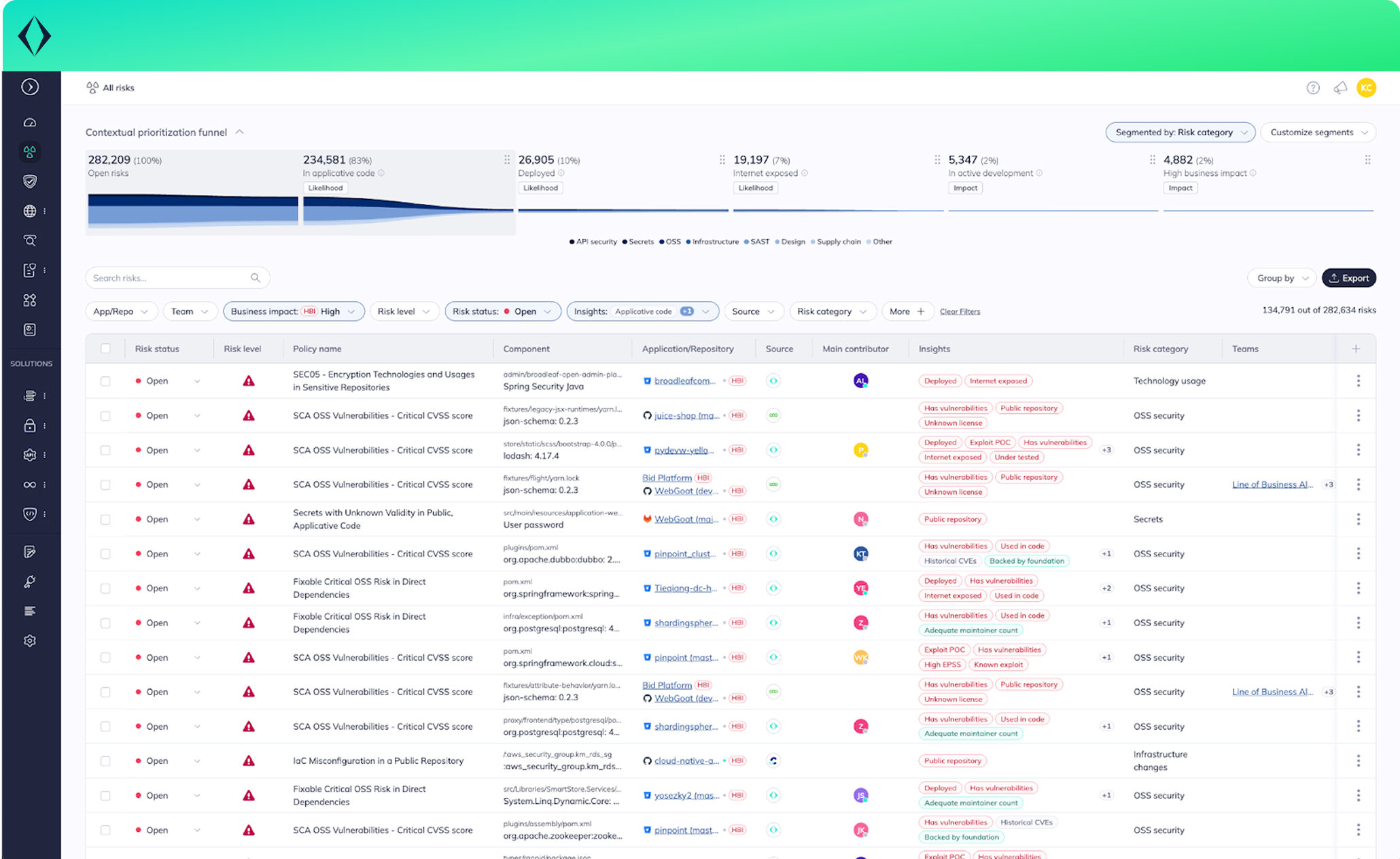
Apiiro brings the rigor of enterprise-grade security—honed in finance, SaaS, and other regulated sectors—to meet the evolving demands of telecom networks.




WHY APIIRO FOR TELECOMMUNICATIONS
Secure Software Design for a Connected Telecom Industry
As the telecommunications sector expands with advancements like 5G, IoT, and cloud services, the landscape of cyber threats becomes increasingly complex. Maintaining a proactive application security posture is essential to protect sensitive data and ensure uninterrupted service.
- Accelerate Deployment Without Compromising Security: Apiiro enables rapid development cycles while embedding security throughout the software lifecycle.
- Early Risk Detection: Identify and mitigate vulnerabilities in the design phase, preventing issues before they escalate.
- Secure Development and Delivery: Design, develop, and deliver secure telecom applications for subscriber management, network orchestration, and billing.
- Balance Innovation and Risk: Rapidly adopt technologies like 5G and edge computing while maintaining compliance with telecom regulations and protecting critical network infrastructure.


Monitor Hundreds of Pull Requests Every Week
Track changes across network APIs, OSS/BSS systems, and cloud-native apps for full-stack visibility and secure deployments.

Reduce MTTR From Days to Minutes
Mitigate risks before they disrupt network availability, degrade service quality, or impact subscribers with real-time visibility and prioritization.
Manage Application Risk from One Place
Get near-instant visibility across your entire application portfolio and focus on the risk-affected areas that matter most.
“We’re finally fixing more vulnerabilities than we’re detecting—a huge milestone for us.”
We can see vulnerabilities in a single timeline—from code to runtime—without spending extra time mapping or tagging everything. It’s really helpful for both developers and our team to focus on prioritizing the most critical risks. ”


Improve Risk Visibility and Response
Using our patented deep code analysis (DCA), Apiiro creates a continuous application inventory–called the eXtended software bill of materials (XBOM)–that provides a clear view of vulnerabilities across telecom service APIs, subscriber databases, and core network applications.
This visibility helps prioritize and mitigate the highest risks to telecom infrastructure and customer data, ensuring compliance throughout the development lifecycle.
Automate Compliance for Telecom Regulations
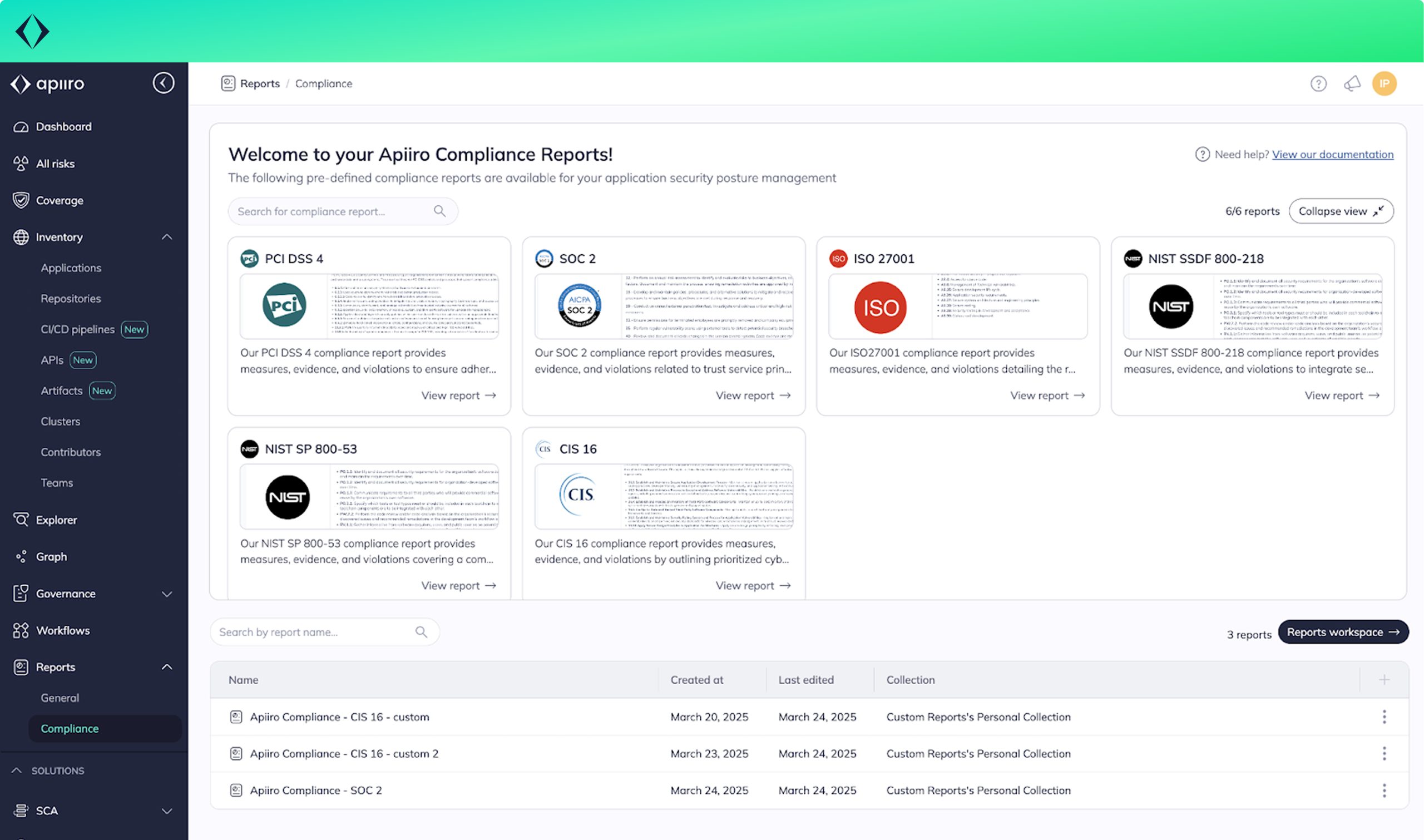
Apiiro helps telecommunications providers comply with industry regulations such as FCC, GDPR, and NIST by automating material change detection and triggering relevant security actions.
This ensures critical network infrastructure and customer data remain protected while simplifying audit preparation with clear evidence of risk management.

Clarify Security Roles and Responsibilities
Clarify Security Roles and Responsibilities
Managing security roles across distributed telecom networks, numerous code repositories, and critical integrations like subscriber data platforms and network APIs can be a challenge.
Apiiro helps by mapping risks to specific teams, using features like OrgTeams to ensure clear ownership and accountability–without disrupting service innovation of deployment.
CUSTOMER STORY
Navan Automates Risk Assessments and Reduces Security Bottlenecks
- Achieved near-instant visibility into components, risks, and material changes across repositories and applications.
- Automated risk assessments and prioritization, replacing manual security reviews and alert triage across hundreds of weekly pull requests.
- Shifted application security earlier in the development lifecycle with actionable, risk-based developer guardrails.
“Apiiro recognizes and classifies risks in a way I have not seen any other company do.”

Keep your network open for business–closed to threats
Discover how Apiiro secures telecom applications from development to deployment.
Resources
-
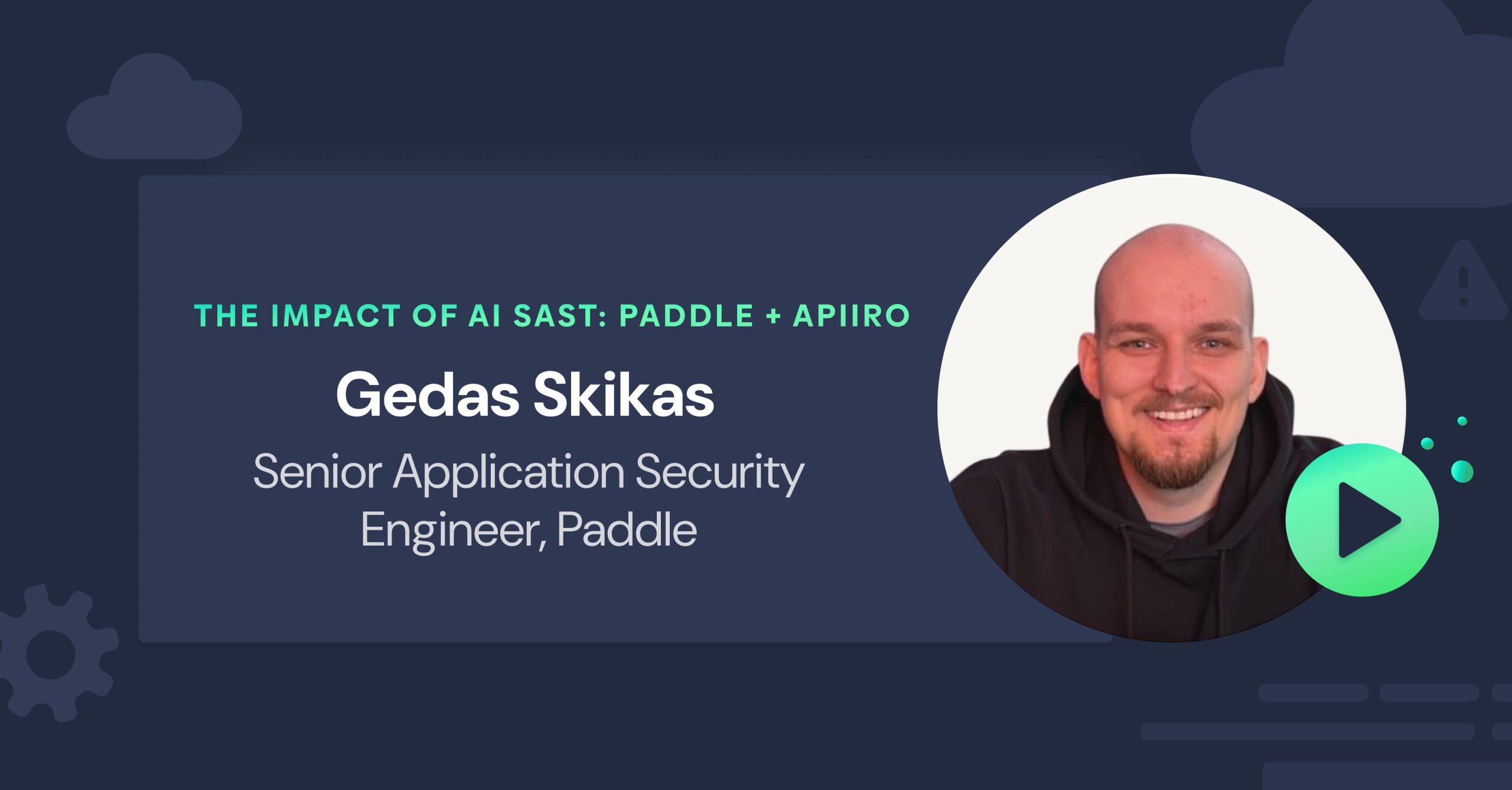
The Impact of AI SAST: Paddle + Apiiro
The Impact of AI SAST: Paddle + Apiiro We sat down with Jed, Senior Application Security Engineer at Paddle, to talk about the biggest challenge security teams face day to day: cutting through the noise. Jed shared how high false-positive rates and low-context findings can slow teams down, making it harder for developers to confidently […] -

2025 Frost Radar™ for Global Application Security Posture Management
We’re proud to be included for the first time in the Gartner® Magic Quadrant™ for Application Security Testing (AST). This recognition validates Apiiro’s leadership in helping global enterprises unify and automate application security. -

2025 Gartner® Magic Quadrant™ for Application Security Testing
We’re proud to be included for the first time in the Gartner® Magic Quadrant™ for Application Security Testing (AST). This recognition validates Apiiro’s leadership in helping global enterprises unify and automate application security. -

IDC MarketScape: Worldwide ASPM 2025 Vendor Assessment
Download the full report to understand how leading enterprises are tackling supply chain risk and why Gartner included Apiiro as one of just nine representative ASPM vendors with SSCS capabilities. -

Video: How Apiiro Matches Runtime Traffic to Code APIs Using Machine Learning
Learn how Apiiro’s ML solution matches runtime traffic to code APIs. This video reveals a two-stage pipeline using BERT and TF-IDF for 90%+ precision, solving complex endpoint-to-API challenges. -

Video: How Apiiro Uses LLMs to Detect Risks at the Design Stage
We sat down with Adam Jordan, Distinguished Engineer & Head of Secure, Sustainable Software at Shell to discuss Shell’s approach to secure software development. -
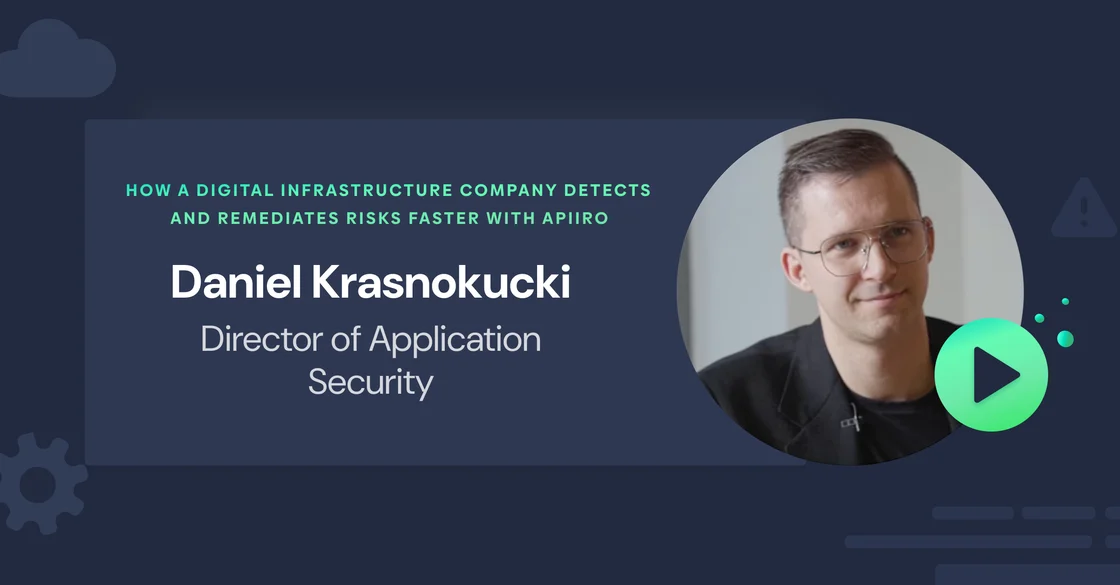
Digital Infrastructure Leader Scales Small Development Team with Apiiro
Code-to-Runtime + Deep Code Analysis = More fixes, fewer alerts KPI We sat down with Director of Application Security Daniel Krasnokucki, who built from scratch a team dedicated to securing application architecture for a development community 1500 strong at a leading digital infrastructure provider. Here are the highlights: Q: What do you expect from a […] -

Application Security Posture Management (ASPM) Business Outcome Report
Save over $500K annually with insights from our Business Outcome Report. Get a clear view of developer costs, defect reduction, and risk remediation timelines — all customized to your business needs. -

Case Study: How LTP and Apiiro Together Forge a Stronger, Resilient Framework
How Apiiro helped LTP develop capabilities to build an SLA/MTTR framework for code security, prioritize vulnerabilities via filtering in software composition analysis (SCA), and reduce their reliance on multiple security tools, resulting in significant time savings and improved DevSecOps processes. -
ASPM RFP / RFI Template: 99 Essential Evaluation Criteria
Uncover the 98 key ASPM capabilities to evaluate for comprehensiveness and fit with your business requirements. -

Case Study: How Cloudera balances development speed and product security with Apiiro
Learn how Apiiro helped Cloudera consolidate their AppSec tools and get risk-based context to reduce their backlogs and meet customer security and regulatory requirements. -

SANS Webcast: Modernizing AppSec with Apiiro Application Security Posture Management (ASPM)
SANS Certified Instructor Matt Bromiley and Idan Plotnik, our Co-Founder and CEO showcase the power of taking a contextual, risk-based approach to AppSec and how Apiiro is setting the diamond standard for ASPM. -

SANS Report: Modernizing AppSec with Apiiro Application Security Posture Management (ASPM)
See how Apiiro Application Security Posture Management (ASPM) unifies application risk visibility, prioritization, & assessment in this SANS First Look report. -

Omdia Market Landscape: Application Security Posture Management (ASPM)
Learn about the evolution and outlook of the ASPM market, the need for ASPM, vendor evaluation recommendations, and more. -

Case Study: How Paddle created a force multiplier for AppSec with Apiiro
Learn how Apiiro’s ASPM platform enabled Paddle to adopt a developer-centric and risk-based approach to AppSec and act as a force multiplier for their team. -
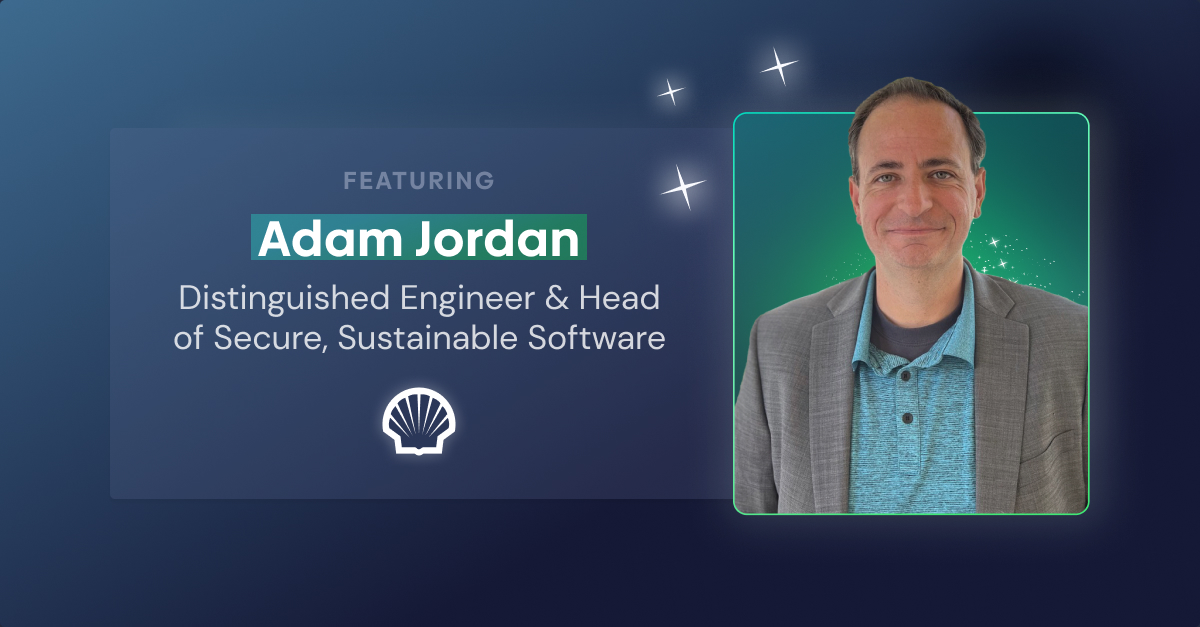
Video interview: How Shell enables autonomous secure software delivery
We sat down with Adam Jordan, Distinguished Engineer & Head of Secure, Sustainable Software at Shell to discuss Shell’s approach to secure software development. -

Dark Reading Webinar: Code-to-Runtime API Security with Apiiro and Akamai
Apiiro and Akamai join forces in this webinar to discuss the complexities of protecting your API estate and how taking a code-to-runtime approach is the key to complete, proactive, and efficient API security. -

Case Study: How SoFi empowers development velocity while reducing application risk
Learn how Apiiro’s deep code analysis and automation enable SoFi to prevent new risks without blocking developers. -

Apiiro’s Integrated Software Supply Chain Security and ASPM Demo
See Apiiro’s integrated approach to software supply chain security as part of our ASPM in this on-demand demo. -

Automating Material Code Change Detection and Response for Continuous Compliance
Learn about the importance of automatically detecting and assessing material changes to ensure consistent, data-driven application security and compliance. -
Application Security Posture Management (ASPM) Deep Dive
Delve into the ASPM components enabling teams to transform siloed AppSec tools and processes into holistic, proactive, and risk-based AppSec strategies. -

Modern Software Supply Chain Security: Integrated, Interconnected, and Context-Driven
Learn what a holistic approach to SSCS requires and about the key components you should look for in a modern SSCS solution as part of an ASPM. -

Optimizing AppSec Webinar: A Deep Dive into ASPM’s Risk-Based Approach
Watch this webinar to learn about the evolution of ASPM, how to build a risk-based AppSec program, and how to operationalize ASPM. -

Why You Need an XBOM: An eXtended Software Bill of Materials
Learn what your SBOM is missing and how having an XBOM can take your application and supply chain security program to the neXt level. -

ASPM Checklist: 17 Application Security Posture Management Must-Haves
Download this ASPM checklist to get the 17 core components to look for in an ASPM solution to improve your AppSec efficiency and reduce application risk. -

Leveling the AppSec Playing Field with Application Security Posture Management
Get observations from the forefront of the ASPM movement and learn about its silo-breaking benefits when implemented at scale -
XBOM Checklist: 16 Key eXtended Software Bill of Materials Components
Learn how the eXtended Software Bill of Materials (XBOM) goes beyond SBOM for complete, real-time application attack surface visibility and risk assessment. -

Risk Graph Explorer Explained: theCUBE Interview
Risk Graph Explorer Explained: theCUBE at RSAC Interview Learn about Apiiro’s risk-based approach to application security and Risk Graph Explorer in this RSAC interview with theCUBE’s John Furrier. -

GSoft Case Study
GSoft Case Study GSoft lacked visibility across all repositories, making it challenging to properly classify, recognize, and focus on the most critical risks. In addition, without automation, their two-person team could not continuously monitor changes made by 130+ developers to fix issues that were most important to the business and their customers. Solution Results -

New York Stock Exchange Floor Talk: Idan Plotnik
New York Stock Exchange Floor Talk: Idan Plotnik Co-Founder & CEO Idan Plotnik joins NYSE Floor Talk to talk about how Apiiro empowers developers and security engineers with complete visibility and actionable context so they can proactively fix risks across the software supply chain. -

Navan Case Study
How Navan automated AppSec governance throughout the development lifecycle with Apiiro Highlights The challenge: Automating AppSec early and at scale Like many AppSec teams, Navan’s didn’t have nearly enough cycles or resources to manually keep up with the hundreds of pull requests created each week. Even with multiple AppSec tools in place, they couldn’t guarantee […] -

Rakuten Rewards Case Study
Rakuten Rewards Case Study Challenges Solution Results -

ESG White Paper: Modern Application Security is Failing
Application security programs are failing to scale and no longer meet the needs of today’s agile and cloud-native development processes. -

Kaltura Video Case Study
Kaltura Video Case Study Video transcript: I’m Roy Avrahamy, an Application Security Engineer at Kaltura. We have over 200 developers and only one me. I created a Kultura Aplication Security function from scratch, and Apiiro provides me with the visibility and context I need to build a mature and measurable AppSec program. So first, Apiiro […] -

Samir Sherif, CISO at Imperva
Samir Sherif, previous Chief Information Security Officer at Imperva, discusses the power of Apiiro’s risk-based inventorying to build a DevSecOps culture. -

Charles Blauner, Former CISO at Citi Group
Charles Blauner, Former CISO at Citi Group Video transcript: If a CISO had to think about Apiiro and only think about it in one way, I would focus on this. You don’t often get to go and sit down with the CIO and talk about a win-win situation at a place like Citi. There was […] -
Complete Guide: 6 Steps to Build & Scale a Risk-Based AppSec Program
Follow our 6-step guide for building and scaling a risk-based application security program to accelerate delivery, reduce costs, and minimize risk. -
Apiiro’s Winning RSAC 2021 Innovation Sandbox Pitch
Apiiro’s Winning RSAC 2021 Innovation Sandbox Pitch