


Cookies Notice
This site uses cookies to deliver services and to analyze traffic.
📣 Introducing AI Threat Modeling: Preventing Risks Before Code Exists


 Back
Back

Unified risk and vulnerability management across application, infrastructure, and code quality scanners, with code-to-runtime actionable context

Automated security controls validation and assurance based on your organization’s SDLC policies, with actionable context from your CMDB

Risk Graph policy engine and developer’s guardrails at every phase: design, development (pull request), and delivery (build/deploy)
Back



Software development has changed. AI coding agents now generate and deploy code in minutes. Features move from idea to production faster than traditional security processes can keep up. Architectures evolve continuously, often without clear boundaries between design and implementation. Security, in many cases, still operates as if none of this has changed. This is creating […]



AI writes your code now, but your security tools still assume a human wrote every line. We built a CLI that works with your AI coding assistant, scanning, analyzing, and remediating security risks as part of the development flow. Creating Security-Aware AI Coding Assistants Development teams now deliver code at four times the velocity of […]



Threat Analysis and Prevention That Understand Your Software Architecture – From Design, Code, and Runtime. In the modern software development lifecycle (SDLC), the distance between a concept and its deployment has collapsed. Driven by AI-assisted coding and high-velocity continuous delivery, code is now generated and shipped faster than human-led security processes can ever hope to […]

In Q3 2024, Google’s CEO Sundar Pichai revealed that more than 25% of new code at Google was being generated by AI. By Q4 2025, that number had doubled to roughly 50%. What Google has accomplished reflects what’s happening across the enterprise software world. And it raises a question every security leader needs to answer: […]

Between rising supply-chainattacks, AI-generated code, new compliance mandates, and complex deployment architectures, organizations struggle to answer even the most basic questions about how software is built — and whether it’s built securely. Today, we’re excited to introduce a foundational capability for SDLC governance and software supply chain security: Apiiro’s SDLC System of Record (SoR). The […]

In a recent interview, Apiiro sat down with Thomas Dohmke – former GitHub CEO and now Strategic Advisor to Apiiro – to discuss the impact of AI on software development, and what it specifically means for application security. From coding on a Commodore 64 to leading one of the world’s most influential developer platforms, Thomas […]

Key Takeaways Vulnerability exploitation just overtook credential abuse as the number one cause of data breaches for the first time in the Verizon DBIR’s history. The volume problem behind that shift is staggering. CVE submissions to NIST’s National Vulnerability Database grew 263% between 2020 and 2025, with Q1 2026 running a third higher still. Every […]

AI agents are deeply embedded in real enterprise workflows; generating content, orchestrating processes, writing production code. And with each new commit and each new workflow comes new potential risks, all moving faster than humans can review. That’s why Gartner’s recent recognition of “guardian agents” as an emerging category is an important step forward for cybersecurity, […]
Key Takeaways The average enterprise runs 144 machine credentials for every human identity it governs, and almost none of them have an owner, an expiration date, or a security review. Non-human identities, the service accounts, API keys, tokens, and certificates that power every automated workflow in modern development, now outnumber human identities 144 to 1 […]

Open source software (OSS) is the foundation of modern digital infrastructure – but with convenience comes hidden risk. An Antidote to OSS Sprawl: Signals + Data + Governance The average application now pulls in hundreds of third-party dependencies, challenging engineers to validate potential security risks from vulnerabilities. Security teams need more than lists of CVEs. […]

Application security has come a long way from the days of Waterfall workflows. Practitioners today do more than manage long-cycle vulnerability scanners, running detection on static languages; they must coordinate remediation efforts by identifying code owners, train developers in threat modeling, and enable secure code review in AI-generated pipelines – all with limited headcount and […]

At a recent OWASP Israel panel, four leaders across software development, application security, and enterprise risk gathered to address a hard truth: AI is not just accelerating development, it is straining the foundations of modern security frameworks. The panel featured: The discussion focused on how AI-driven development is reshaping velocity, ownership, governance, and risk prioritization. […]
Key Takeaways Every application security audit your team has run was built on the assumption that a human wrote the code, understood it, and intended every line. But the way teams write and ship code has changed. 84% of developers now use or plan to use AI coding tools, and the code these tools produce […]
Key Takeaways Every AppSec team is buried in scan results, but almost none of them can tell you which findings would actually lead to a breach. The volume of security alerts keeps climbing, and yet, the vast majority of that output is noise. Research shows that 95% of application security alerts can be safely deprioritized […]

Key Takeaways Every scanner your team runs adds findings. None of them tell you which ones would actually lead to a breach. Most organizations already run SAST, SCA, and secret scanners. The problem is that each tool produces its own list, in its own dashboard, with its own severity scale. And yet, none of them […]
Key Takeaways Your AppSec team tracks every CVE in the codebase, but may not know which licenses could force you to open-source your proprietary code. Open source components now appear in 96% of commercial codebases. Every one of those components carries license terms that dictate how the code can be used, modified, and distributed. Some […]
Key Takeaways More scanners won’t fix your security backlog. By the end of 2024, 30% of production code was AI-generated. Supply chains now pull in thousands of open-source dependencies per application. Cloud-native infrastructure spins up and tears down in minutes. The attack surface is expanding faster than any security team can manually review, and traditional […]
Featuring Thomas Dohmke (Apiiro Strategic Advisor & former CEO of GitHub), Liora Shechter (CEO of Mataf at First International Bank), Yevgeny Dibrov (CEO and Co-Founder of Armis), and Idan Plotnik (Co-Founder and CEO of Apiiro). AI-driven software development is forcing a fundamental shift of development speed and a rethink of application security. In this executive […]
Key Takeaways Enterprise security budgets, tooling, and scanner counts keep expanding, but AppSec backlogs aren’t shrinking. The problem isn’t a lack of automation, but rather a lack of context. Organizations deploy dozens of overlapping security tools across fragmented pipelines, generating thousands of alerts that mostly don’t represent real, exploitable risk. This means teams spend more […]
Key Takeaways Your security team runs a dozen tools and still can’t answer a simple question: are we actually secure? The shift to cloud-native architectures and distributed systems broke the old model of reactive, tool-by-tool security. Collecting alerts from siloed scanners doesn’t tell you whether your controls work, whether your applications are protected, or where […]
The narrative often sold by AI adoption is one of efficiency. The actual data points to one of sprawl. We are in the midst of a reckoning with the benefits and costs of AI coding assistants. Data clearly points to valuable boosts in productivity and skill: A study from Anthropic highlighted a 50% increase in […]



The Era of Prevention Apiiro started by building our foundational pillars for delivering secure, compliant code – Deep Code Analysis (DCA) and the Software and Risk Graphs™. These enabled us to move security processes from reactive to proactive. From intermittent to continuous. With this Apiiro Data Fabric in place, we went AI-native; embedding AI in […]

Apiiro Guardian Agent introduces a fundamentally new paradigm in application security – from reactive detection to seamless prevention. Development teams now deliver 4x more code at unprecedented speed using AI coding assistants and agentic tools. But this acceleration has expanded the software attack surface beyond what traditional application security models can control – and introduced 10x […]
Key Takeaways Most teams treat DAST like a checkbox before release, then wonder why vulnerabilities keep showing up in production. The problem is timing and context. Legacy scanners were built for quarterly audits against static HTML pages. They can’t keep up with API-first architectures, microservices, or CI/CD pipelines that deploy dozens of times a day. […]
Threat modeling holds a simple premise: before writing code, security and engineering teams analyze how a system could be attacked, and design defenses to prevent those threats from ever becoming exploitable vulnerabilities. When done well, it is one of the most effective ways to build secure software. Organizations that invest in threat modeling consistently identify […]
Key Takeaways Security tools that slow developers down don’t get used. And tools that generate thousands of alerts without context overwhelm teams and obscure the risks that matter. The shift to CI/CD changed how teams build software. But most security tooling didn’t keep up. Scanners still run in batch mode, findings still land in separate […]
Key Takeaways The most dangerous authorization flaw in your application looks exactly like a legitimate request. That’s why your scanner missed it. IDOR vulnerabilities exploit a simple gap: DAST tools catch injection flaws and misconfigurations well. But they weren’t built to reason about ownership. They can’t tell the difference between a user accessing their own […]

In the early days of network security, perimeter defense was simple: Inspect packets. Match them against a list of known bad patterns. Block anything that looked suspicious. That was the era of static firewall rules – a world where threats were relatively predictable, environments were mostly stable, and thick rulebooks somehow worked. Then came the […]
Why Read This? Ask ten people what AI-assisted coding, vibe coding, or agentic coding mean – and you’ll likely get ten different answers. These terms are often mixed together, even though they describe very different ways of building software, aimed at very different audiences. The goal of this short read is to remove the confusion. […]


Static Application Security Testing (SAST) is a legacy technology, invented decades ago and largely unchanged since. With the rapid adoption of AI coding assistants and agentic coding tools, development velocity and the application attack surface have increased exponentially, pushing traditional SAST beyond its breaking point. What was once an application security engineer and developer problem […]
Application security and development teams have relied on SAST scanners that excel at recognizing patterns based on static rules, but struggle to deeply understand the software architecture graph from code to runtime. Now, the supercharged speed of development – powered by AI-assisted coding – has made the SAST results unsustainable. Traditional scanners lack the ability to give application […]
Key Takeaways In 2026, leaked credentials represent one of the fastest paths into your infrastructure. Credential weaknesses were exploited in 89% of incidents investigated by Palo Alto Networks’ Unit 42 this year, making secret leakage the most reliable attack vector in modern application environments. Mature engineering teams with strong security budgets still leak secrets, not […]
Key Takeaways Most engineering leaders hear “DORA” and think deployment frequency and lead time, but the EU’s Digital Operational Resilience Act (DORA) carries far higher stakes than a DevOps scorecard. The EU DORA regulation (Regulation (EU) 2022/2554) took effect in January 2025. It requires financial entities to prove they can withstand and recover from ICT […]
Key Takeaways Over 40,000 CVEs were disclosed in 2024, and security backlogs are at record highs, despite most AppSec teams running both SAST and SCA in their pipelines. So why do high-risk vulnerabilities still reach production? The tools work. SAST catches flaws in your custom code while SCA flags known vulnerabilities in your dependencies. But […]

AppSec teams face an explosion of API-related risks that are difficult to track, prioritize, and remediate. Many ASPM providers claim they offer true code-to-runtime endpoint matching, but in a best-case scenario, they can only match the runtime host or project to its code application or repository – not to the specific line of code. This […]

Frost & Sullivan has named Apiiro the most innovative Application Security Posture Management (ASPM) provider worldwide, recognizing Apiiro’s unique ability to prioritize the needs of an enterprise customer base while also pushing the envelope on AppSec innovation. This distinction reinforces Apiiro’s position as the most innovative ASPM company — not just for building groundbreaking technology, […]

Key Takeaways When 67% of security alerts go uninvestigated and 83% are false positives, teams need coordinated testing and cross-tool correlation to reduce noise and focus on real risk. Today’s engineering teams face a challenging paradox. They’ve invested in SAST, DAST, SCA, and secret scanners to cover every angle of application security. But these tools […]

On December 3, 2025, coordinated disclosures revealed critical remote code execution (RCE) vulnerabilities in React Server Components (RSC) and Next.js: At the core, the issue is unsafe deserialization in the RSC “Flight” protocol. With a single crafted HTTP request to an exposed RSC / Server Function endpoint, an attacker can reach pre-auth arbitrary code execution […]
Key Takeaways By the end of 2024, 30% of production code was generated by AI. By 2028, Gartner estimates that number will hit 75%. One problem: your quarterly risk assessment cycle was built for a world where humans wrote every line. Vulnerability counts are exploding, but CVSS scores alone don’t tell you which risks actually […]
A new and significantly more aggressive wave of Shai-Hulud malware is rapidly propagating across the npm ecosystem. Known as Shai-Hulud 2, this campaign is infecting hundreds of open-source packages with a trojanized preinstall script that executes an obfuscated Bun-based payload. Once activated, the malware steals sensitive credentials—including API tokens, SSH keys, cloud access keys, and […]

The software industry is in the middle of its most profound shift. AI is no longer an assistant on the sidelines; it is writing the majority of new code across modern engineering organizations in Fortune 500 enterprises. This pace unlocks incredible innovation, but it also introduces unprecedented risk. Today, I’m excited to share that Thomas […]

When it comes to threats to source code, inadvertent leaks are far more common than open theft. Robust governance is the best way to identify and stop potential source code exposures – but shifts in security priorities have made this difficult, even for the largest organizations. Cloud-based source control systems, muddled identity models and democratized […]
Key Takeaways You can write flawless code and still ship a vulnerable application. That’s the reality of insecure design. If the architecture lacks proper authorization controls, no amount of input validation will prevent privilege escalation. If session management is flawed at the blueprint level, secure coding practices can’t patch it. This is why OWASP added […]
Key Takeaways Open source software now forms the foundation of modern applications. Recent audits show that roughly 74% of codebases contain high-risk vulnerabilities from open source dependencies. While AI coding assistants accelerate development, they often introduce unverified dependencies and subtle logic flaws. Traditional periodic scanning and manual triage can’t keep pace with this velocity. As […]

Key Takeaways Code review used to be about catching bugs before they shipped. Today, it carries far more weight. With AI-assisted development accelerating the pace of change and complexity, code review has become one of the last reliable points for preventing security, architectural, and business risks from reaching production. Modern teams are shipping more code, […]
Key takeaways Code execution was once tightly controlled by developers, pipelines, and review gates. Now, agentic AI is changing that model by generating and running code dynamically, often with broad permissions and limited visibility into how decisions are made or actions are triggered. This shift is already happening. According to Gartner, 33% of enterprise software […]
The latest analysis from 451 Research and Daniel Kennedy indicates that security leaders are citing a lack of coordination between AST tools as a major pain point – and the complexity of application security tools is the #1 issue for InfoSec experts today. The Rise of Agentic AI — and the New Security Imperative In […]

Key Takeaways The shift to high-velocity software development is complete. Teams push updates constantly, and AI coding assistants now support a large share of day-to-day coding tasks. According to GitHub’s Octoverse 2025 report, 80% of new developers on the platform use Copilot within their first week. And it’s not hard to see why, with developers […]

Key Takeaways Most security failures today come down to one issue: teams can’t see how their applications actually work. Scanners run in isolation and generate findings with no clear context, material changes slip through the cracks, and design flaws stay buried until they cause real problems in production. When the architecture is unclear, even the […]
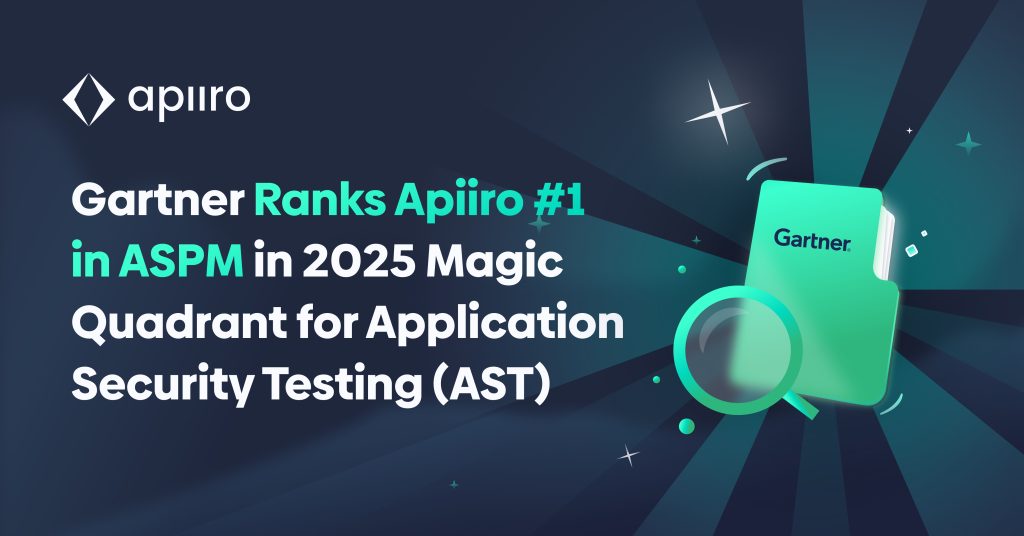
Apiiro ranked number one in ASPM capabilities among all vendors with critical AST capabilities. Apiiro has been recognized in the 2025 Gartner® Magic Quadrant™ for Application Security Testing (AST). This marks Apiiro’s first appearance in a Magic Quadrant, and it comes with a notable distinction: Gartner ranked Apiiro #1 for Application Security Posture Management (ASPM). […]
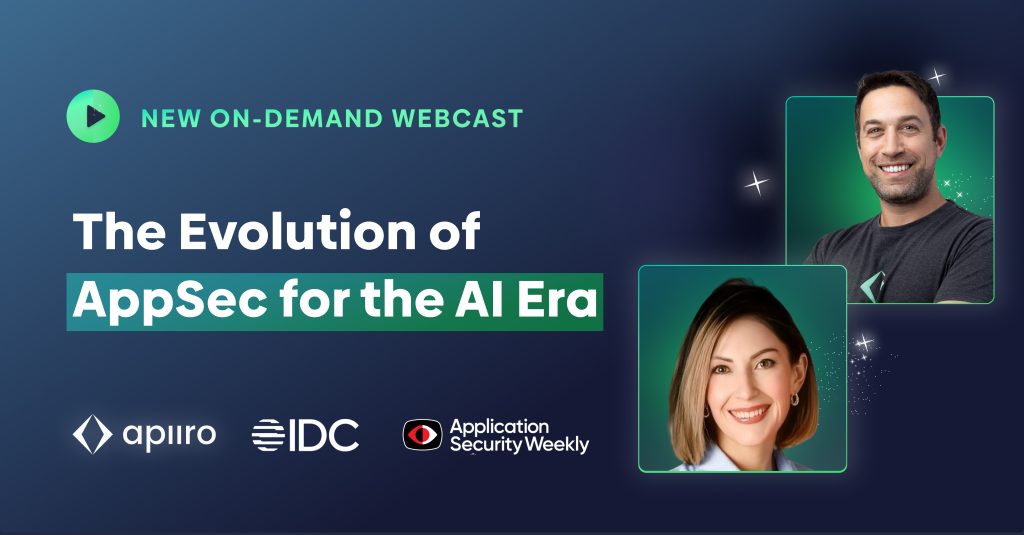
AI isn’t arriving. It’s here—living inside our applications, accelerating how software gets built, and reshaping the relationship between developers and security. In a recent webinar, Apiiro’s Idan Plotnik and IDC analyst Katie Norton joined Application Security Weekly’s Mike Shima to unpack what this shift means for AppSec leaders and engineering teams on the ground: the […]


AI coding assistants like Gemini Code Assist are now part of the everyday developer toolkit. They accelerate progress in a way that still feels almost unbelievable—turning a rough prompt into working features in a matter of seconds. But in an enterprise environment, the measure of success isn’t just speed. Code that runs is not necessarily […]

Open Source Software (OSS) is the backbone of modern development. With thousands of dependencies powering today’s applications, organizations must balance speed with governance, ensuring that licenses are properly managed and risks are minimized. Yet, navigating OSS license obligations has often been fragmented and frustrating. Apiiro is excited to introduce our new OSS Licenses experience—a streamlined, […]
Key takeaways AI is helping developers move faster, but it’s also creating a flood of risky changes that security teams can’t triage manually. Every new commit, dependency update, and API release expands the attack surface. Teams are shipping more code than ever, but they’re also inheriting more complexity, including opaque supply chains, AI-generated functions with […]
The Challenge of Code Ownership In today’s fast-paced development environments, security and R&D often operate in silos. This disconnect makes it difficult to identify not just who contributed to a piece of code, but who is ultimately responsible for maintaining it and addressing vulnerabilities. Mapping ownership effectively is about more than tracking commits—it’s about connecting […]
Enhancing Apiiro’s AI Bill of Materials (AI BOM) with AI Agents and MCP Server Detection Capabilities Back in 2023, we shared how Apiiro helps organizations uncover shadow GenAI frameworks in their codebases using our Deep Code Analysis (DCA) technology. That visibility-first approach gave AppSec leaders clarity into which frameworks and exit points were being introduced, […]
Key takeaways Security teams deal with a growing volume of alerts and application signals that change with every commit, deployment, and service update. But traditional tools struggle to interpret this level of complexity, and important risks often hide inside large streams of low-value findings. A 2024 Columbia University study compared single-model reasoning to coordinated-agent reasoning […]
Most teams think their scanners tell them where the risks are. The reality is that scanners only show symptoms. The real risks live in the architecture, and most organizations never see them. Each release introduces new APIs, code paths, and data flows that reshape how exposure spreads, yet these structural shifts often happen quietly in […]
The application security landscape is at an inflection point. Development teams are shippingcode faster than ever with the help of AI coding assistants, and while productivity is soaring, sois risk. Organizations adopting generative AI tools in software development are experiencing10x more security risks, particularly around design flaws, data exposure, and policy violations. Against this backdrop, […]
The open-source ecosystem has once again become the stage for a major supply chain attack, this time leveraging the popular npm package @ctrl/tinycolor and spreading virally across the registry. What began on September 15, 2025, quickly escalated into one of the most significant npm compromises to date, impacting over 180 packages across the ecosystem. This […]
AI coding assistants have become the latest accelerators of modern development and the new generators of hidden risk. Tools like Cursor and Windsurf can write, refactor, and even deploy production code in seconds. Every line they produce feels like progress. Yet every line also carries a question: how secure is the code you didn’t write […]
Software development now includes a new type of participant: agentic AI, better known as autonomous systems that perceive, decide, and act independently. These agents can write code, configure infrastructure, and trigger workflows without waiting for human approval, enabling exponential speed that’s accompanied by an equally steep rise in complexity and risk. Unlike generative AI, which […]
Infrastructure-as-code (IaC) represents a shift from manual provisioning to programmable infrastructure. Instead of relying on scripts or human input, teams define networks, compute resources, and configurations as version-controlled code. This creates consistency across environments and transforms infrastructure management into a repeatable, testable engineering process. For DevOps and security leaders, the value extends far beyond automation. […]
On August 26, 2025, threat actors launched a sophisticated supply chain attack on the widely used Nx build system, publishing multiple malicious versions of the nx and @nx/* npm packages. These versions contained data-stealing malware that, once installed, executed post‑install scripts to exfiltrate sensitive developer data—such as SSH keys, API tokens, npm credentials, GitHub tokens, […]

Every CEO Is Mandating AI Coding. Few Realize They’re Mandating Risk Too. Here’s the Data to Prove It. When Coinbase CEO Brian Armstrong ordered every engineer to adopt AI coding assistants (and fired those who didn’t) he captured the new reality: AI adoption is no longer optional. He’s not alone. Lemonade’s CEO Daniel Schreiber has […]

Key takeaways Generative AI is transforming how software gets built. What once took days of manual effort can now be generated in seconds, with AI assistants assembling entire features from a single prompt. This has led to a development cycle that moves faster than any before it, and one that’s introducing new kinds of complexity […]
How Apiiro is driving the shift towards intelligent, AI-Ready application security. Aligning Security with AI-Driven Development The 2025 Gartner® Hype Cycle™ for Application Security confirms what many security leaders are already starting to see: application security is being redefined by the pressures brought on by AI coding assistants. Code is being written faster, often by […]


AI coding assistants like GitHub Copilot, Cursor, and Gemini Code Assist are fundamentally changing how software is built. Already by the end of 2024, 30% of code was AI-generated. By 2028, Gartner projects that 75% of enterprise developers will be using AI assistants as part of their daily workflow. This shift has unlocked significant gains […]
AI coding assistants like GitHub Copilot, Cursor, and Gemini Code Assist have transformed software development. Developer productivity has soared. So have the speed and volume of material code changes, code complexity, and risks. But AppSec teams haven’t scaled proportionally – and the resulting surge in design and code risks is unsustainable. Fortune 500 companies need a […]

Application Security (AppSec) has long been the backbone of software protection. Secure coding practices, vulnerability testing, and penetration assessments built the foundation for keeping applications safe. But the modern software ecosystem has transformed. Cloud-native architectures, containerization, and microservices create a development environment defined by speed and complexity. Meanwhile, code moves from commit to production multiple […]
The way developers write software is shifting rapidly with the rise of vibe coding, a workflow where natural language prompts guide AI coding assistants to generate production-ready code. This new paradigm transforms developers into reviewers, testers, and refiners rather than line-by-line implementers. The gains in speed are undeniable. Boilerplate scaffolding, standard integrations, and even complex […]

The Future Is LLM-Driven—and It Can Be Secure Large language models are now a staple in how developers write code. They’re used to scaffold new components, suggest implementations, and automate repetitive tasks. But as their adoption grows, so do the questions about the security of what they generate. A recent study by a research group […]
1. The Alarming Surge in CVEs As of June 2025, over 21,500 new vulnerabilities have flooded the market—an average of 133 CVEs per day. That means roughly 10,000–11,000 CVEs have been published in the last six months alone. 2. Understanding Code‑Level Root Causes While CVEs capture specific incidents, their underlying weakness types can be mapped […]

The software supply chain has become one of the most contested battlegrounds in security. Modern applications are no longer made up of monolithic code. They’re assembled from thousands of moving parts, including open-source libraries, commercial components, and proprietary modules , all stitched together inside fast-moving pipelines. When even one of those pieces is compromised, the […]

Every modern business is built on software. Applications deliver customer experiences, streamline operations, and drive revenue growth. But they’ve also become a prime target. Each new API, microservice, or dependency expands the attack surface, and with it, the opportunities for attackers to exploit design flaws, misconfigurations, or weak points in the supply chain. In fact, […]

In a recent webinar, Apiiro and ServiceNow showcased a powerful new integration that helps security teams manage risk across the software development lifecycle with greater context, automation, and accuracy. The joint solution brings together Apiiro’s deep code analysis and code-to-runtime correlation with ServiceNow’s market-leading CMDB and Application Vulnerability Response (AVR) capabilities, creating the industry’s first […]
A reality check for no-code development A new wave of “vibe coding” platforms is putting software development in the hands of anyone, not just trained engineers. Users can design and deploy full-stack applications entirely using natural language, AI models, and low-code/no-code tools. But, as a recent security incident shows, there are still major wrinkles to […]

Static application security testing (SAST) has matured into a cornerstone of modern application security. By scanning source code, bytecode, or binaries before an application runs, these tools help developers detect and remediate issues while they’re still inexpensive to fix. In 2025, SAST has matured into a core element of DevSecOps pipelines and developer workflows across […]
Twice the adoption, 7× the risk: GenAI in retail vs finance GenAI is already reshaping enterprise codebases — but how it’s adopted, built, and secured differs drastically across industries. Apiiro, the leading Agentic Application Security platform, used its patented Deep Code Analysis (DCA) engine to examine over 100,000 code repositories across the software development lifecycle. […]
Modern development moves at a pace that depends on open source, third-party libraries, APIs, and even AI-generated code. Each of these accelerates innovation, but they also create a complex software supply chain where one overlooked dependency can expose sensitive data, disrupt compliance, or slow delivery. According to Gartner, nearly 30% of enterprise code was generated […]

Every customer login, payment, and API call runs through a web application. That makes web apps not just business enablers, but also prime attack targets. The landscape has shifted: attackers don’t need novel exploits to cause damage. Breaches like Equifax exposed the personal data of nearly 148 million Americans when a known Apache Struts vulnerability […]

Enterprises rely on ServiceNow’s Configuration Management Database (CMDB) as the system of record for infrastructure and applications. It supports critical processes across IT operations, security, compliance, and risk. But as software delivery accelerates, and as architectures become more dynamic, distributed, and AI-assisted, keeping the CMDB current has become increasingly complex. Code repositories, APIs, containers, GenAI […]
In today’s AI-accelerated development world, application security often feels like chasing shadows: endless alerts, manual checklists before delivery, and dashboards so noisy they drown out real risk. At the root of the problem? A lack of structured, actionable data. Without it, every scanner, workflow, and platform falls short. Three Critical AppSec Challenges in Large Enterprises […]

In fast-moving, agile development environments, software architecture evolves constantly. Lacking a reliable way to visualize how components are connected, security reviews risk being slow, shallow, or based on outdated assumptions, and vulnerability management becomes reactive. Apiiro’s new Software Graph Visualization gives security teams a real-time, visual map of how software components interact across your systems […]
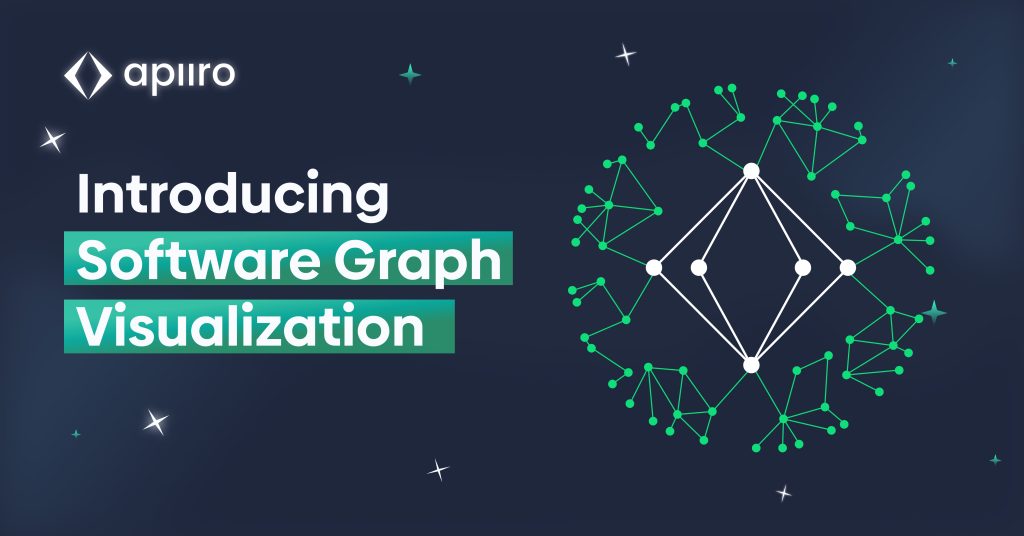
Modern applications are incredibly complex and ever-changing. Code is spread across many repositories, frameworks, and cloud services, making it difficult for security teams to get a clear, up-to-date picture of how everything fits together. Traditional threat modeling often relies on static diagrams or developer interviews that become outdated almost immediately. Apiiro’s Software Graph Visualization tackles […]
Security standards aren’t the problem—how we apply them is. Embedding these standards into the development lifecycle, complete with the right level of context and automation, accelerates progress. It’s safe to say the real friction comes from fragmented tools, manual reviews, and unclear ownership. That’s what turns well-intentioned frameworks into slow, reactive processes. Modern development demands […]

Continuous security monitoring (CSM) tools have never had more reach, but context is what turns reach into action. Today’s platforms ingest signals from endpoints, cloud services, CI/CD pipelines, and even source code, yet still struggle to prioritize what matters. Organizations are pouring resources into tools that promise 24/7 monitoring across endpoints, networks, cloud environments, and […]
In a major milestone for the AppSec industry, Gartner® has released its first-ever Market Guide for Software Supply Chain Security (SSCS). This inaugural report defines the SSCS market, outlines core capabilities buyers should prioritize, and names representative vendors across key adjacent categories, including Apiiro as a recognized ASPM vendor with SSCS capabilities. The release of […]

AI-driven development is rewriting the rules of application security as we know it. By the end of 2024, nearly one-third of enterprise code was AI-generated, and Gartner projects that number will surge to 75% by 2028. While this acceleration enables faster delivery and new features at scale, it also introduces risks that traditional security models […]

Traditional penetration tests are too slow for modern development. They often require weeks of back-and-forth between security and engineering just to figure out what to test–never mind the test itself. And in the time it takes to scope targets manually, the codebase has already changed. Agile penetration testing turns this problem on its head. By […]

AI-driven software development has created a fundamental shift in how teams build and ship code. From GitHub Copilot to custom LLM agents, artificial intelligence is now embedded across the development lifecycle, accelerating everything from function creation to test generation and even full application builds. But that acceleration comes with tradeoffs. Code is being suggested—and accepted—without […]

In a timely discussion hosted by S&P Global Market Intelligence, Principal Research Analyst Daniel Kennedy sat down with Idan Plotnik (Founder of Apiiro) and Jason Espone (Global Head of Application Security Engineering at C.H. Robinson) to explore the evolution of Application Security Posture Management (ASPM). With application environments growing increasingly complex, the panel addressed how […]

Open source has become indispensable to modern software development, but it’s also become one of the biggest attack surfaces. By compromising a single OSS component, attackers can exploit every application or system that includes it. And because these vulnerabilities often hide deep in your dependency tree, they’re easy to miss and hard to fix. That’s […]
More than 40% of AI-generated code is vulnerable. And developers are committing it faster than security teams can keep up. The explosion of popular AI coding solutions like GitHub Copilot, Windsurf, Cursor, and Claude Code has dramatically accelerated software delivery. But while teams race to ship faster, this new precedent introduces insecure code, risky dependencies, […]
At Apiiro, we’ve closely analyzed the impact of AI-driven development on API security, finding that while AI-powered coding assistants accelerate API creation, they often do so without prioritizing security—introducing new risks that can go undetected without proactive monitoring. This challenge is now validated by Gartner’s latest research, Leaders’ Guide to API Security, which highlights the […]
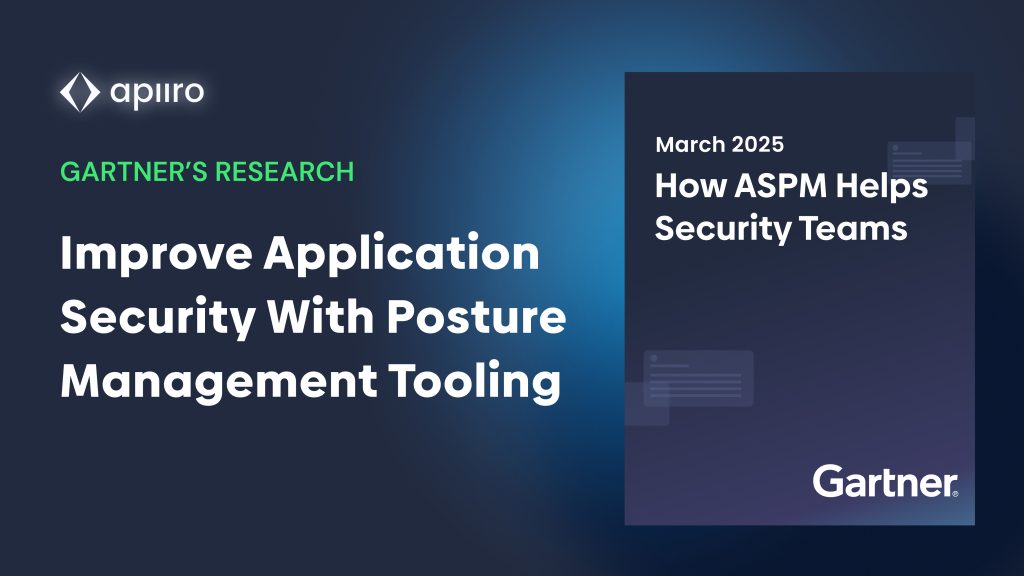
Application security has long struggled with a fundamental problem: too many vulnerabilities, not enough context. In its latest research, Improve Application Security With Posture Management Tooling (March 2025), Gartner underscores the role of Application Security Posture Management (ASPM) in addressing this issue. Apiiro is proud to be included in this report, which highlights how ASPM […]
The recent compromise of the tj-actions/changed-files repository on March 14 caused significant security concerns. Now that the vulnerability was mitigated, the focus turns to preventing future incidents. What happened? A personal access token (GitHub PAT) of an overly permissioned account was compromised, pushed a malicious commit to the tj-actions/changed-files repository, and repointed all existing tags […]

Why Regular Vulnerability Assessments Are Essential Applications are at the heart of modern business operations, but they’re also a top target for attackers. Vulnerability assessments are a crucial process that helps security teams identify and mitigate weaknesses before they can be exploited. Without regular application vulnerability scanning, even well-secured systems can become a liability, especially […]
Application security vs product security: which one is right for you? Securing applications is more challenging than ever. Even a simple web app has multiple layers, dependencies, and potential vulnerabilities. How do you ensure your application is protected without adding unnecessary complexity? Two main approaches—application security (AppSec) and product security—help mitigate risks, but they serve […]

Today’s enterprises manage sprawling, complex codebases encompassing thousands–sometimes hundreds of thousands–of repositories. This scale is driven by factors including microservices architectures that fragment applications, multiple teams managing distinct services, legacy systems coexisting with modern applications, compliance requirements that mandate separate repositories, and inherited codebases from acquisitions. Without clear visibility into the underlying frameworks and technologies, AppSec […]
Application Security Posture Management (ASPM) is gaining recognition as a core business requirement, not just a niche security function. This is evidenced by Gartner’s recent Innovation Insight: Application Security Posture Management (ASPM), authored by Giles Williams, Aaron Lord, and Dionisio Zumerle. Published in January of 2025 as an update to the 2023 edition, the report […]
Security leaders are under pressure to keep up with rising threats, stricter regulations, and fragmented security tooling. With application security risks at an all-time high, teams need a streamlined way to secure their software, without slowing down development. That’s where ASPM and ASOC come in. According to IBM, the average global data breach cost hit […]
The Continuous Integration/Continuous Deployment (CI/CD) model is an essential component of agile DevOps. But, poorly implemented, it can also create significant vulnerabilities that threat actors are happy to exploit. When compromised, a CI/CD pipeline becomes a direct line into your codebase, infrastructure, and customer environments. It’s why pipeline security has become a top priority, not […]
What Are Container Scanning Tools? Container scanning tools are specialized software solutions designed to analyze container images for known vulnerabilities, misconfigurations, and compliance issues. These Docker security tools inspect various components within a container, including operating systems, libraries, and application code, to identify potential security risks before deployment. Modern container vulnerability scanners examine container layers, […]
Agentic AI refers to artificial intelligence systems capable of autonomously executing tasks, making informed decisions, and interacting with their environment proactively. Unlike traditional AI, which follows predefined instructions passively, Agentic AI actively sets and pursues goals, dynamically adapting to new information and evolving situations. Why is Agentic AI Revolutionary for Application and Cloud Security and […]
Security teams are drowning in vulnerabilities, false positives, and compliance demands—while development moves faster than ever. Traditional security tools can’t keep up, leaving organizations exposed. That’s why Application Security Posture Management (ASPM) has become the backbone of modern application security. ASPM systems are purpose-built security platforms that secure custom applications by reviewing code, APIs, and […]
New research from Apiiro uncovers key trends in AI-powered code creation and application security business risks. Summary The rise of GenAI code assistants like GitHub Copilot has dramatically increased code creation velocity in the past two years, even as the number of developers has remained steady. However, this acceleration comes with significant security risks: a […]

Security teams are caught in a perfect storm: tightening budgets colliding with an ever-expanding attack surface. While your applications and the infrastructure they run on are inherently deeply connected, your security tools are not – forcing you to piece together a complete risk picture from multiple dashboards and fragmented data sources. Today, we’re excited to […]
Applications and cloud environments have never been more complex, and securing them has never been more important. However, a strong security posture risks creating inefficiencies, especially in DevOps. How can you secure apps without bogging down development? Application Security Posture Management (ASPM) has quickly become the answer for many companies. This security methodology focuses on […]
Malicious code is widespread and easy to use against any target. This year, our security research and data science teams detected and analyzed thousands of malicious code instances in repositories and packages, with new ones emerging every day. For instance, we published findings on how millions of GitHub repositories were cloned and infected with malware […]

Engineering and security teams often accumulate security debt—unaddressed or poorly implemented measures that increase risk to their organization’s systems and data over time. Addressing this debt systematically is crucial, but competing priorities and fast-paced release cycles frequently lead to deep security backlogs and escalating risks. Apiiro helps security leaders and developers take control of these […]

Application security leaders are faced with the challenge of making sense of data scattered across tools, workflows, and software development lifecycle stages. Without a real-time, code-to-runtime view of their risk posture, it’s difficult to track progress, prioritize risks, or clearly communicate the value of security efforts to stakeholders. As a result, inefficiencies are created, teams […]

A year ago, we excitedly announced our technical alliance with Akamai to tackle one of the most pressing challenges in modern application development: securing the entire lifecycle of APIs from code to runtime. Together, we introduced a solution which connected Apiiro’s application security posture management (ASPM) with Akamai’s runtime API security, completing the path to […]


The second-largest ASPM deal to date, valued at $4 million, comes second only to Apiiro’s record-breaking $5 million partnership with a Fortune 10 enterprise in 2024. This deal focuses on delivering millions in operational savings with application security automation. By automating thousands of developer hours, identifying sensitive data for PCI 4.0 compliance, and reallocating resources […]


For application security teams, connecting vulnerabilities identified in runtime back to their source in the code has long been a complex and time-consuming challenge. Apiiro’s new Code-to-Runtime capability directly addresses this difficulty, enabling AppSec practitioners to prioritize risks more effectively and ensure remediation reaches the right developers – without the need for manual setup or complex […]
Our advanced Code-to-Runtime Matching Technology powered by Deep Code Analysis (DCA) addresses one of the most significant challenges in modern software development and security: bridging the gap between source code and application runtime.

Apiiro has secured the largest ASPM deal in the market, a $5 million partnership that underscores the rising importance of risk-based application security. Discover more.

Apiiro and Bugcrowd team up to streamline risk remediation and boost AppSec security with unified visibility and automation. Discover more.


Apiiro and Bugcrowd team up to streamline risk remediation and boost AppSec security with unified visibility and automation. Discover more.

Apiiro, the leader in application security posture management (ASPM), has forged an exciting partnership with Aerowave, a premier cybersecurity services consultancy based in Singapore. The collaboration marks a significant milestone in bringing cutting-edge ASPM solutions to the Asia Pacific (APAC) market, addressing the growing demand for comprehensive application security tools in the region. As enterprises […]

Managing identities across diverse systems is a daunting challenge, even for experienced application security experts. Practitioners need a reliable method to track and secure all user activities within their applications, especially when multiple systems are in play. Apiiro addresses this challenge with its powerful identity matching algorithm, which integrates data from various sources to provide […]

A Better Way to “Shift Left” Application Security Traditional approaches to security in software development typically address security risks only after development has started, or even post-deployment, leading to costly fixes and potential security breaches. The modern DevSecOps approach aims to integrate security early in the software development lifecycle (SDLC). However, even this “shift left” […]

At Apiiro, we’re always pushing the boundaries of what’s possible in application security. Today, we’re thrilled to announce our latest innovation: Risk Detection at Design Phase. This groundbreaking, first-of-its-kind feature shifts risk detection left in the software development lifecycle, and enables application security (AppSec) practitioners to mitigate security and compliance concerns before a single line […]

In an era where cybersecurity threats are constantly evolving, it’s crucial for companies to take proactive steps in securing their software. That’s why we’re proud to announce that Apiiro is among the first 25 companies, and the first ASPM company, to sign America’s Cyber Defense Agency’s Secure by Design Pledge. This commitment underscores our dedication […]

Hey there, AppSec experts! The Apiiro team is buzzing with excitement as we gear up for Black Hat USA 2024. August 7-8, Las Vegas will transform into a cybersecurity wonderland, and we’re here to make sure you don’t miss a beat. Here’s what you need to know: Business Hall | Apiiro Booth 2622 | August […]

Black Hat USA 2024 was a stellar event. In addition to Apiiro’s Booth on the trade show floor, our CEO, Idan Plotnik, spoke during one of the sponsor sessions on all things Application Security, Risk, Compliance and Security Management. Watch the session here: Here’s what Idan dove into: Understanding, prioritizing and remediation risks in modern […]

We are thrilled to formally announce SHINE, Apiiro’s new integration program! SHINE (which stands for the program’s guiding principles: seamless, holistic, interconnected, vendor-neutral, and enriched) is a direct reflection of our core ethos of connecting the tools our customers trust to securely develop and deliver their applications. Read more about the program principles here → […]


Apiiro’s new interactive prioritization funnel uses risk likelihood and impact factors garnered from Deep Code Analysis (DCA), runtime context, and third-party databases to help you cut through the noise and narrow in on real, business-critical risks.

Get our take on the Omdia ASPM Market Landscape—distilled into 4 key ASPM questions answered.

Our newest integration brings together the best of Apiiro’s ASPM with Secure Code Warrior’s industry-leading developer security training.

Learn how to measure, track, and optimize your AppSec program using the new Apiiro Reports.

Our new integration with ServiceNow Vulnerability Response brings the power of Apiiro’s multidimensional application risk response to streamline management and response.

Dig into the new and updated PCI 4.0 requirements and learn how a deep ASPM can help with achieving compliance.


A new malicious code campaign impacting 100k GitHub repositories is evading detection and benefiting from unsuspecting developers actually helping the malware spread.
Dive into Apiiro's breakthrough LLM-based free-text code search engine that identifies malicious code patterns without depending on large datasets.

Our newest technical alliance combines the power of Apiiro’s ASPM with deep code analysis and Akamai’s runtime API security and threat protection for unified and contextual code-to-runtime API security.


Explore these five hard-to-find application and supply chain risks with ease using Apiiro’s Risk Graph Explorer.

Apiiro’s new Wiz integration brings the power of Wiz’s CNAPP to Apiiro’s deep ASPM to unify application and cloud security.

Apiiro’s ASPM platform now automatically detects GenAI frameworks, so organizations have full visibility into privacy, data, and legal risk introduced by these frameworks.

Apiiro adds integrated software supply chain security to its ASPM platform, extending it with native CI/CD pipeline and source control manager visibility, detection and assessment, and governance.

Learn the pros and cons of different approaches to application security posture management (ASPM) and what a “deep ASPM” solution entails.

Apiiro’s security research team has developed a revolutionary approach for accurately connecting code segments—such as open-source packages or commits—by similarity.

Idan Plotnik, Apiiro Co-Founder and CEO shares open letter on how Apiiro is supporting its people, customers, and partners during wartime challenges.

The new SEC rule for cybersecurity presents new challenges for AppSec teams. Here's how Apiiro can help companies identify, respond, and communicate material code changes to ensure SEC compliance.

A critical security flaw, CVE-2023-4863, has been identified in libwebp. Identify and prioritize instances of the new WebP 0-day that are most risky to your business with Apiiro—without runtime agents.

Teams need a holistic way to prioritize risk based on their application architecture, the nature of their business, and overall risk tolerance. These dimensions of risk prioritization ensure you can remediate risk at the speed of development without sacrificing quality or security.


Managing secrets at the scale of modern development is also more complex than ever. Apiiro goes beyond secrets detection with new secrets security features including grouping and surfacing valid, invalid, or revoked insights.

With just traditional tooling and manual processes, it’s nearly impossible for security teams to accurately map their application attack surfaces. Here are six essentials to effectively map and reduce application attack surfaces at scale.
Read our blog on detecting material code changes automatically and at scale to reduce application risk and satisfy compliance and regulatory requirements.

New overall and solution-specific dashboard tiles provide visual insights into important application security KPIs such as MTTR, risks over time, development velocity, material changes, and more.
Our approach to identifying malicious open-source packages combines LLMs with proprietary pattern detection and self-enhancement to improve accuracy at scale.

Introducing XBOM, our up-leveled approach to SBOM that provides unified visibility across all application and supply chain components, their connections, risks, and more.

In response to overwhelming malicious activity, PyPI temporarily suspended the creation of all new users and projects.

Over the past few decades, application security has seen dozens of market categories, hundreds of new approaches, and thousands of solutions. From legacy point solutions like SAST, DAST, and SCA to new approaches like DevSecOps and software supply chain security. As per Gartner, “Application security tools invariably produce reams of data about potential vulnerabilities. Traditional, […]


Modern applications are more complex, interconnected, and ephemeral than ever. They’re made up of countless code modules, dependencies, APIs, data models, and technologies developed across numerous languages, frameworks, and contributors, maintained, built, and deployed across multiple repositories, SCMs, CI/CD pipelines, and cloud environments. And they’re all constantly changing. At Apiiro, we always believed that effective […]

Applications are becoming more distributed, interconnected, and dependent on third-party components than ever.
Microsoft Defender founder, Moti Gindi, joins as Apiiro’s chief product officer to push Apiiro into the next hypergrowth phase.

The Apiiro AI engine discovered a malicious Python package that is currently presented on the python PyPI package management portal.


Find out how you can identify and fix material changes with Apiiro so your developers can focus on bringing more value to customers!


The latest incident involves Dropbox and relates to exposed secrets from 130 private repositories belonging to the company.
The latest release of OpenSSL contains a patch for recent vulnerabilities and announced just a week ago on October 25th.

A few days ago OpenSSL, the widely-used cryptography/TLS project released a very rare announcement that notified the public of an upcoming release of the project code that will fix a critical 0-day vulnerability. The release (OpenSSL version 3.0.7) is being released today and it is intended as a security fix for a critical vulnerability in […]
A recent leak of almost 300,000 of Toyota's customer emails and control numbers showcases the risks of exposed secrets in code.

Find our strategies to build cybersecurity around the NIST guidelines that form new regulations announced by the White House.
Static application security testing (SAST) analyzes app source code, byte code, and binaries for security vulnerabilities.
Software bill of materials is a document that provides tracking for all of the key elements in the software development supply chain.

To effectively monitor security of APIs, you need to take the necessary steps and know what to look for in API code.

Find out how to detect cloud-native application architecture drift and deal with it early in the SDLC.

Cloud has transformed the way development teams design, develop, build and deploy applications. Developers are moving fast and the number of changes and releases is increasing exponentially, as are the risks. In the era of cloud-native application development, the remediation lifecycle is getting longer and more complex because risks are distributed across design, code, open […]
A comprehensive Software Bill of Materials (SBOM) provides full visibility to what makes up software including its cloud components.
What is Spring-Core remote code execution (RCE) vulnerability (“Spring4Shell”)? Here is what you should know.
Learn how to shift left security and proactively fix API code risks early in the software development lifecycle.
Detecting and remediating secrets is only one piece of the AppSec puzzle. Issues must be understood with context alongside other security risks.
DevSecOps enables effective collaboration between Development, Security, and Operations throughout the software development lifecycle.
Attackers are always looking for the path of least resistance. Be sure to address simple known risks to close those gaps.
With the rise of cloud-native applications, we need to change our approach to application security - not to the Top 10 itself, but how we understand and remediate Top 10 vulnerabilities.
Apiiro's Security Research team has discovered a major vulnerability in Argo CD platform (CVE-2022-24348).
AppSec starts at the user story. Since the speed of development has grown rapidly over the past few years, “security during design” is critical.
A rogue developer intentionally corrupted npm libraries, showing the need for developer activity analysis in supply chain security.
Static application security testing has been vital to AppSec programs for decades, but SAST lacks the context to keep up with DevOps.
The Cloud Native Application Protection Platform (CNAPP) is a new market definition of an integrated approach to secure cloud-native apps.
Software supply chain attacks have changed AppSec. SolarWinds, Codecov, and more show a need for defense from design to code to cloud.
Apiiro won the RSA Conference Innovation Sandbox Contest in May 2021 and we’ve been learning the following lessons since then.
On Wednesday, Oct. 7 2021, an anonymous 4chan user claimed to have posted 125 GB of data from 6,000 internal Git repositories. Twitch confirmed the massive data leak, including source code and creator earnings, and stated that the breach was due to a “server configuration change”. While there will be many negative repercussions of this […]
Businesses can do more than shift left. “Extending right” by incorporating IaC processes increases agility and improves security.
Developers are getting more responsibility and as a result, attackers can use developer identities to gain system access.

Application security engineers and security champions must work together to achieve AppSec goals and a secure software development lifecycle.
Gartner reports there are escalating threats to software supply chains. Discover the Apiiro platform’s supply chain security capabilities.

Understanding and remediating the risk of secrets in code cannot be done in isolation. Learn how to do both.
Put simply: your board doesn’t care about application security. It cares about application risk, which includes both security and compliance.
We need to take a new, risk-based approach to change management for the SDLC - and it needs to span from design to code to cloud.
Is your application security program aligned with your business goals and tolerance for risk? Here's how to find out.
We have a collective prioritization problem. While this is true when analyzing individual applications, it is also true across applications. Organizations aren’t good at nuance. They tend to “think” in terms of rigid processes and ignore risk and potential business impact. Unfortunately, this approach has a real-world impact on application risk. Consider a list of […]
This blog demonstrates some of Apiiro’s anomaly detection capabilities that are used by our clients to protect and secure their repositories.
A multi-dimensional approach to code risk analysis can optimize processes by focusing SDLC tools on the “changes that matter most.”
Dealing with security alerts is a daunting task for developers and security architects as it requires much time and resources to review and triage them.
Better information leads to better decision-making. That’s not a particularly bold statement. But at the same time, we have a tendency to look for data in our narrow area and then … just more of it. More fields. More reports. More dashboards. We don’t often take the opportunity to step back and re-evaluate what you’d […]
Current approaches to DevSecOps fail to fully automate existing app and cloud security processes, which are periodic and do not scale.
Apiiro has developed a patent-pending technology to detect and prevent SolarWinds-style attacks before shipping binaries to production.
Consider how to identify risky material code changes and prevent them from being deployed in the first place.
By moving to continuous and simultaneous model, you are able to improve the speed of the entire DevOps process.
Enterprises that allow developers to be responsible for the end-to-end delivery are at the forefront of Digital Transformation.
Apiiro's solution accelerates delivery and go-to-market by bridging the gap between development, security, and compliance teams.

This site uses cookies to deliver services and to analyze traffic.